EXPERIENCE NATURE IN A NEW WAY

RECONNECT. REFLECT. RENEW. – DEEPEN YOUR SPIRITUAL BOND WITH NATURE

+

Whether you’re 30 or 65, your connection to nature is as vital as ever. At NatureReal, we believe that fostering a deep, living relationship with nature can enriche not only our daily lives but also our inner, spiritual well-being.

Whether you’re 30 or 65, your connection to nature is as vital as ever. At NatureReal, we believe that fostering a deep, living relationship with nature can enriche not only our daily lives but also our inner, spiritual well-being.

+

We’re also the home of the NatureReal App, a digital companion designed to enhance your experience of nature connection. Originally created for individual explorers, the app is now also gaining recognition among educators and adult learning providers who are looking to bring more nature-based insight into their offerings.

Welcome—your journey into deeper awareness, presence, and connection starts here.

+

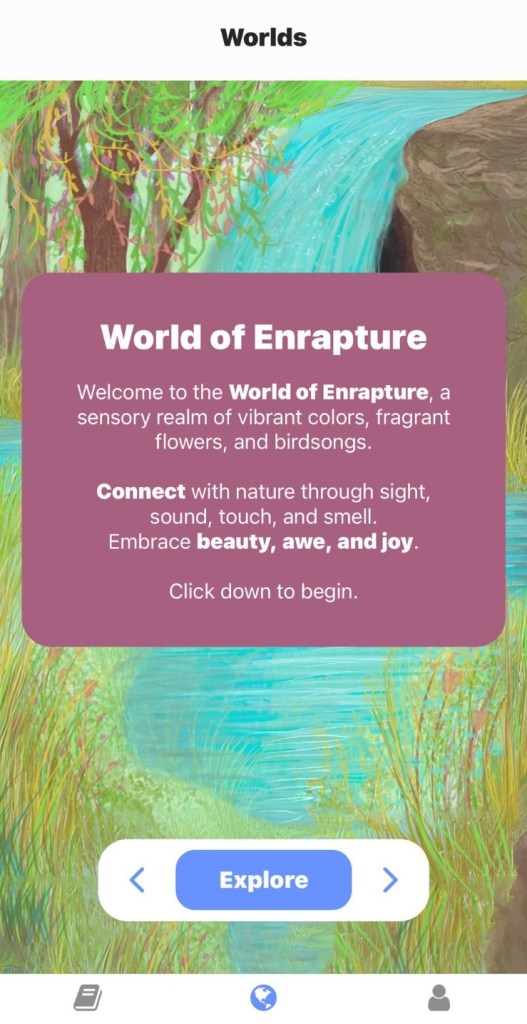
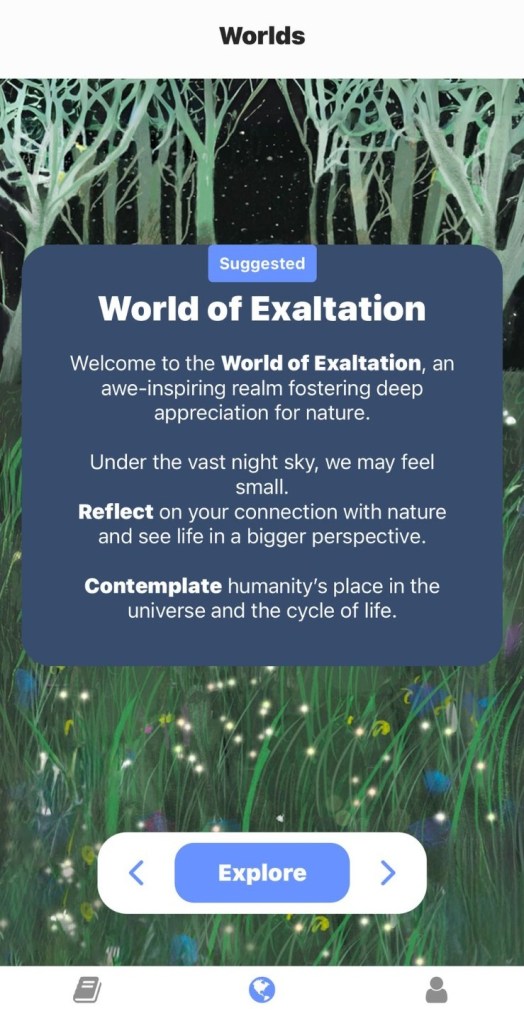
Nature Intelligence is an app designed to help you discover and enhance your natural intelligence. Through interactive tests and thematic worlds, you’ll explore practical exercises that promote awareness, empathy, and a deeper connection with nature. You’ll be guided by a friendly animal companion, who will support you throughout the journey with explanations and encouragement.

+

The app features a Natural Intelligence Test to help you identify your strengths and choose which thematic world to start with. Each world offers unique practical activities, such as taking photos, recording audio, or writing notes, to stimulate your senses and reflect

NATURE: A SOURCE OF WISDOM, WELLNESS, AND WONDER

In today’s fast-paced, technology-driven world, adults often find themselves disconnected from the natural environment. Urbanization, sedentary lifestyles, and the pressures of modern life have distanced people from the outdoors, which can negatively impact both their mental and physical health. At the same time, this disconnection contributes to a lack of awareness about themselves and about environmental issues, making it more difficult for individuals to adopt sustainable practices.

Numerous studies have shown that spending time in nature has significant benefits for mental and physical health and for a fulfilling social life that allows for authentic relationships. By developing the NatuReal app our intention is to encourage adults to connect with nature, providing them with tools to improve their overall wellbeing—helping them reclaim balance and harmony in their lives. One of the key advantages of this mobile app is its ability to cater to individual preferences, making nature connection accessible to everyone.

This ensures that anyone, regardless of their circumstances, can enjoy the benefits of the magical moments that nature connection provides. Moreover, the NatuReal app is intended to allow adult educators/trainers and adult organizations to extend their services to adults that can’t, for a reason or another, participate in person in adult education  practices. One of the key advantages of this mobile app is its ability to cater to individual preferences, making nature connection accessible to everyone. This ensures that anyone, regardless of their circumstances, can enjoy the benefits of the magical moments that nature connection provides.

CO-CREATING WITH NATURE:

THE DEVELOPMENT JOURNEY OF OUR APP

The creation of the Nature Intelligence App was a thoughtful and collaborative journey rooted in research, dialogue, and creativity. At its core lies a robust theoretical foundation, drawing from the Nature Intelligence framework—a model that explores how connecting with the natural world can support personal growth, wellbeing, and deeper meaning in life. To ground this vision in both science and relevance, we conducted a narrative review exploring the intersection of nature and positive technologies. We examined how digital tools—especially mobile apps—can be designed not as distractions from nature, but as gateways to reconnect with it. The literature consistently supports the benefits of time spent in nature for emotional balance, mental clarity, and wellbeing. Positive technologies, when used intentionally, have the power to amplify these benefits. Our goal was to harness this potential in a mobile app.

To ensure the app would truly meet the needs of its intended users, we organized focus groups in four countries—Italy, Spain, and the Netherlands. These sessions brought together people aged 30 to 60, our core audience, to explore how they interact with apps, what features they enjoy or avoid, and their preferences when it comes to nature-related digital experiences.

We presented and analysed the findings within the project consortium, allowing for deep reflection and knowledge sharing across cultures and disciplines. From this analysis, we developed user personas—detailed profiles representing the app’s ideal users—which helped guide our design decisions moving forward.

With a clear vision of the users and the theoretical foundation, the consortium engaged in a series of brainstorming sessions. Together, we worked to shape the app around the Nature Intelligence model, aligning the app’s structure with the feedback from users and the insights from research. We decided to focus the app’s first version on the “spiritual” petal of the Nature Intelligence framework—offering experiences that foster reflection, connection, and a sense of belonging with the natural world.

From there, the first version of the app began to take shape in FIGMA, our design tool of choice. Once the initial design was approved by the consortium, we moved on to creating graphic assets that would bring the interface to life—simple, calming, and inspired by nature.

The first functional version of the app included immersive “worlds” with guided exercises, a customizable user profile, a personal diary, and feedback features to support and motivate users. All textual content was written with care and translated into multiple languages, including English, Italian, Spanish and Dutch, to ensure accessibility and cultural relevance.

Next came our first usability test, where we evaluated how users interacted with the app—was it intuitive, engaging, and easy to navigate? This feedback informed a round of refinements to make the experience even smoother.

As we neared completion, we came together once more to brainstorm the app’s name—asking ourselves,

“What do we want this name to communicate? What feeling or message should it evoke?”

After careful reflection, we finalized the app’s identity, along with every detail of its functionality, interface, and content.

Finally, we entered the testing phase, assessing the app’s overall usability and its effectiveness in helping users connect with nature and themselves. The result is a tool designed not just to be used—but to inspire, to guide, and to gently reconnect people with the natural world in their everyday lives.

ERGONOMICS VS. USABILITY

The concept of usability emerged in the 1980s when designers started incorporating ergonomic principles into industrial products. While both fields aim to improve human interaction with products, they have distinct focuses:

  • Ergonomics is a scientific discipline that studies how people physically and cognitively interact with tools, environments, and systems to optimize safety and productivity.
  • Usability, on the other hand, is a subset of ergonomics that focuses on the ease of use and effectiveness of digital and physical products, particularly in human-computer interaction.

ERGONOMICS

According to the IEA (International Ergonomics Association), ergonomics is the science that studies the interaction between the elements of a system (both human and non-human) and their intended function. It also encompasses the theory, principles, data, and methods applied in design with the goal of enhancing user satisfaction and overall system performance. In simpler terms, ergonomics focuses on the study of human-technology interaction to ensure that products, systems, and environments are designed to fit human capabilities and limitations. This approach improves productivity and safety.

Key aspects of usability in app development (an app’s example)

  1. Learnability: New users should quickly understand how to navigate and use the app without extensive instructions.
  2. Efficacy: Users should be able to complete tasks with minimal effort and time.
  3. Memorability: Returning users should not struggle to re-learn how the app works after a period of inactivity.
  4. Errors: The app should minimize errors, provide clear error messages, and allow easy recovery from mistakes.
  5. Satisfaction: The overall user experience should be pleasant, engaging, and aligned with user expectations.

Form usability to user experience (UX)

By the 1990s, research began to recognize that usability alone was not the only—nor necessarily the most important—factor in determining a product’s success. While usability focuses on efficiency, effectiveness, and ease of use, the overall user experience (UX) goes beyond functionality, incorporating emotions, context, and engagement into product design.

Role of emotions (UX)

  • People often form emotional attachments to objects, even if they are not highly usable.
  • We sometimes prefer complex, even challenging experiences over purely “easy” ones.
  • Example: Video games are intentionally difficult but remain enjoyable and engaging.

Context (UX)

  • Physical context: A highly usable app may still fail if it does not account for real-world conditions (e.g., an app designed for outdoor use must be readable in sunlight).

Social and cultural context: Different cultures and user groups have different expectations, preferences, and needs that shape their experience with a product.

WHO DEVELOPED THE APP?

A MULTIDISCIPLINARY TEAM BEHIND THE VISION

ANATTA FOUNDATION- NETHERLANDS

The Anatta Foundation is a non-governmental organisation that focuses on a better connection between people and nature to create more psychological well-being, to get more respect for nature and to work on a ‘sustainable mindset’. We are inspired by ideas from Positive Psychology and various nature-based approaches. In Erasmus+ the foundation enjoys working with young people with a disability and other vulnerable youth groups. The foundation is the lead partner in this Erasmus+ project.

EXPERIENCE LAB – UCSC-ITALY

The ExperienceLab team (www.xp-lab.it), coordinated by Prof. Andrea Gaggioli, is a leading lab in the field of human-computer interaction and Positive Technology, an emerging research field that focuses on the design of digital experiences for promoting empowerment and positive personal change. The ExperienceLab is an enthusiastic team of psychologists who are passionate about the study of human experience, at theoretical, methodological and applied level. The research group has pioneered the use of mobile technologies in mental health and has received several national and international grants. ExperienceLab will contribute its expertise on positive psychology, user experience design, and mobile mental health to support the team in designing and evaluating the mobile app.

KAMALEONTE ADS-ITALY

Since 2004 we promote group nature-based programs addressed to young people. Through experiential learning outdoor activities, we involve them in challenging and adventurous activities in nature during which they are involved at a physical, emotional, sensorial and cognitive level with the aim of increasing awareness about themselves, the others and the context around them. The intention of our programs is to further explore the connection between nature and the inner world of young people, as an important means to discover their nature in the nature. By doing this they strengthen their strengths, gain self-confidence, grow a sense of self-worth and nurture their sensitivity and appreciation towards nature. We are among the founder members of the informal network “International Academy of Experiential Education”, that has been researching on experiential learning as an innovative and holistic methodology for personal and professional. We are also among the founder members of the Adventure Therapy network in Europe, aiming at supporting young people in finding more effective coping mechanisms and discovering and unleashing their potential.

BECOME-ITALY

BECOME. Augmented Life is a psytech company for the innovation of psychological practices in different contexts (clinical, organizational, sports, school, well-being,…) through contemporary technologies such as Virtual Reality and bio/neurosensory. BECOME unites a multidisciplinary Hub composed by a staff of psychologists, medical doctors, psychotherapists, developers, designers, visual and sound artists, neuroscientists, and storytellers. BECOME delivers innovative courses, protocols and digital tools for mental health available to professionals, researchers and end users. BECOME designs immersive digital experiences to amplify psychoeducation, enhance active learning, foster empowerment, facilitate psychological well-being, promote positive change, increase therapeutic efficacy, extend professional interventions and improve the ecological validity of research.

ONAGEB.SPAIN-SPAIN

ONAGEB.SPAIN is a private company composed of experienced trainers, some of them with more than 25 years experienced in adult education teaching as well as development of adult education contents and methodology. Our staff is also experienced in project development/management during the last 16 years. This experience is the basis for the provision of high-quality services such as training evaluation, development of instruments for training analysis, development of innovative concepts for the acquisition of adult education competencies, including development and evaluation of learning modules.

NATURE FOR PEOPLE- NETHERLANDS

Bureau Natuurvoormensen (Nature for People) is the research and consultancy agency of Prof. A.E. (Agnes) van den Berg, based in the Netherlands. Van den Berg is an environmental psychologist who specializes in research on healing environments and health benefits of nature. She is a pioneering and leading researcher in her field, with a track record of nearly 30 years. Her research interests encompass fundamental and applied issues related to the causes, mechanisms and health consequences of people-environment interactions. Van den Berg has authored more than 100 peer-refereed and professional publications on the importance of contact with nature for various groups, including families in deprived neighborhoods, young people with ADHD, and school children. In the past ten years she held a chair in Nature Perception and Health at the University of Groningen in the Netherlands, and currently is the owner of research company Natuand campaigns.

EMPOWER YOUR TEACHING WITH THE NATURE INTELLIGENCE APP

👩‍🏫 Are You an Educator? Discover How to Bring the Nature Intelligence App Into Your Learning Environment

At Nature Intelligence, we understand the value of connecting students with the natural world. Whether you’re working in adult education, outdoor learning, or holistic development, the NatuReal App offers a unique way to deepen your learners’ understanding of nature and foster meaningful learning experiences.

Our free, comprehensive online training course has been specifically designed for educators like you, offering an easy-to-follow guide on how to effectively integrate the app into your educational setting. Whether you’re teaching in a traditional classroom, facilitating outdoor learning experiences, or conducting virtual classes, our program provides step-by-step instructions on how to make the most of the app’s features.

In addition to the training, we provide a variety of supporting resources to enhance your teaching practice. These resources are tailored to help you create engaging, nature-based lessons that will inspire your learners and promote environmental awareness, creativity, and critical thinking.

👉 Ready to explore? Sign up for the free training today and discover how the NatuReal App can bring nature-based learning to life in your classroom, outdoor sessions, or virtual lessons.

WANT TO KNOW MORE ABOUT THE UNDERLYING FRAMEWORK?

At the heart of our work is a strong and innovative framework that guides how we approach nature intelligence in education. Our app is just one part of a broader mission to connect learners with the natural world in meaningful and impactful ways. To understand how this vision is brought to life, we invite you to explore the Nature Intelligence Project website.

The project website offers an in-depth look at the research, theories, and educational principles that inform the development of our tools and resources. You’ll discover the scientific foundations of nature intelligence, the methodologies that support our approach to teaching and learning, and the real-world applications that empower educators and students alike.

Whether you’re an educator seeking to enhance your teaching practice, a researcher interested in the intersection of nature and learning, or simply curious about the philosophy behind nature intelligence, our website provides a wealth of information to help you better understand the framework driving our work.

👉 Visit the Project Website to learn more about the underlying principles and discover the exciting potential of nature-based education.

WANT TO GET IN TOUCH?

WE’D LOVE TO HEAR FROM YOU!

We value every connection and are always eager to hear from you. Whether you have questions about our app, need support, want to share your feedback, or simply have ideas you’d like to discuss, we are here for you. Our team is dedicated to providing the assistance you need, and we believe that open communication is key to building a thriving educational community.

If you’re an educator, learner, or simply someone passionate about nature-based learning, don’t hesitate to reach out. Whether it’s for more information about our resources, troubleshooting help, or suggestions on how we can improve, we are more than happy to listen and respond.

We look forward to engaging with you, building relationships, and supporting you in your journey to integrate nature intelligence into education.

👉 Contact Us through our contact page to get in touch—we’re excited to hear from you!

“The European Commission’s support for the production of this publication does not constitute an endorsement of the contents, which reflect the views only of the authors, and the Commission cannot be held responsible for any use which may be made of the information contained therein.”